How Dentists Decide Between a Filling, an Inlay, an Onlay, or a Crown
Tooth damage doesn't look the same from one patient to the next. That's exactly why there's no single fix that works for everybody. A small cavity might need nothing more than a filling. A cracked molar? That could call for a crown. At SmileCare Dental, patients ask all the time why one option got picked over another. So let's walk through the actual decision-making process, step by step, the way a dentist in Annandale, VA really approaches it chairside.
What Happens First: the Exam and Diagnosis
Before any restoration gets chosen, the dentist needs to see the full scope of the damage. This isn't guesswork. It's a structured evaluation, start to finish.
Visual and Digital Assessment
The first step is a visual exam paired with digital X-rays. X-rays show what's happening beneath the enamel, decay that hasn't reached the surface yet, bone level around the tooth, and whether the damage is creeping close to the nerve.
Checking the Structural Integrity of the Tooth
Next, the dentist checks how much healthy tooth structure is actually left. A tooth can look fine on the outside and still have weakened walls or a hidden fracture underneath. This step often involves gently tapping the tooth, checking bite pressure, and sometimes using a special dye to bring cracks into view.
How Do Dentists Decide If a Filling Is Enough?
Fillings are usually the starting point for smaller areas of decay. If the cavity is contained, and there's enough healthy enamel and dentin around it, a filling is usually all you need.
- The decay is limited to one surface or a small portion of the tooth
- There's enough remaining tooth structure to support the filling material
- The tooth isn't under heavy biting pressure from grinding or misalignment
- No cracks extend into the deeper layers of the tooth
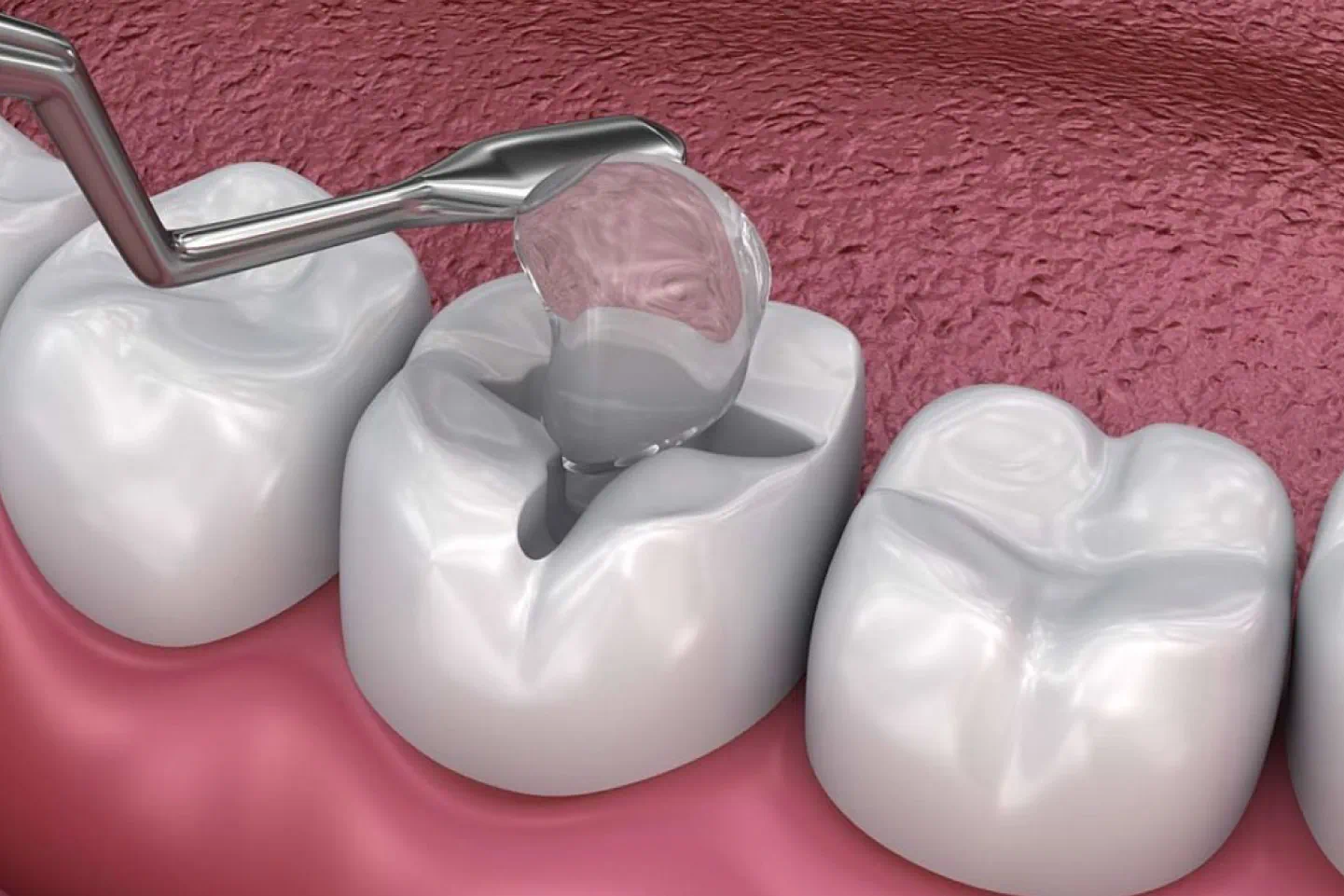
Composite fillings get shaped directly onto the tooth in a single visit. The dentist removes the decayed portion, cleans the area, and bonds the filling material in layers, hardening each layer with a curing light. This layering is what lets the filling match the shape of your original tooth so closely.
When Does a Filling Stop Being Enough?
Sometimes, during the exam, or even partway through a filling procedure, the dentist finds the damage runs deeper than expected. Sound familiar? It's a common turning point.
What Is an Inlay and When Is It Used?
An inlay comes into play when decay or damage is limited to the area between the cusps (the raised points) of a tooth, without touching the cusps themselves.
Step-By-Step: How an Inlay Is Made and Placed
First, the dentist removes the decayed portion of the tooth, much like prepping for a filling. Instead of filling the space right then, an impression or digital scan is taken of the prepared tooth. That scan gets sent to a dental lab, or in some offices, milled in-house using CAD/CAM technology.
While the permanent inlay is being made, a temporary restoration protects the tooth. Once the inlay's ready, usually within one to two weeks if it's sent to an outside lab, you come back for a second appointment. The dentist checks the fit, adjusts as needed, and bonds the inlay into place with dental cement.
What Is an Onlay and How Is It Different?
An onlay covers more of the tooth than an inlay does. It's used when the damage reaches one or more of the cusps, meaning the tooth needs extra support across a bigger surface area.
The process mirrors an inlay: preparation, scanning or impressions, a temporary restoration, then final placement. The difference is coverage. An onlay is sometimes called a partial crown, since it protects more of the tooth's chewing surface while still preserving more natural structure than a full crown would.
At What Point Does a Dentist Recommend a Crown Instead?
A crown becomes necessary once the tooth has lost enough structure that it can't safely support a filling, inlay, or onlay anymore. This is a bigger step, and dentists don't take it lightly. It means reshaping the entire visible portion of the tooth.
Signs a Tooth Needs a Full Crown
- The tooth has a large crack that extends toward the root
- The tooth has had root canal treatment
- There's a history of grinding that's worn down multiple cusps
- A previous large filling failed, or the tooth around it weakened
What Actually Happens During a Crown Procedure
The dentist first removes any decay or old filling material, then reshapes the tooth into a smaller, even structure that can hold the crown securely. An impression or digital scan is taken, and shade matching gets done to blend the crown with the teeth around it.
A temporary crown protects the tooth while the permanent one is made, typically over one to two weeks. At the second visit, the temporary comes off, the fit and bite get checked carefully, and the permanent crown is cemented into place. Many patients seeking dental crowns in Annandale, VA go through this same two-visit process, whether the crown is made from porcelain, zirconia, or a metal alloy. The material depends on where the tooth sits and what you specifically need.
How Does the Location of the Tooth Affect the Decision?
Front teeth and back teeth handle different forces, and they carry different cosmetic weight too. Molars absorb heavy chewing pressure, so onlays and crowns show up more often there when the damage is significant. Front teeth usually prioritize a natural look. So the material chosen, and how much tooth gets reduced, both factor heavily into the decision.
Ready to Get Started?
Dealing with a toothache? A cracked filling? Or maybe you're just overdue for a checkup. Either way, the team at SmileCare Dental can walk you through which option fits your specific tooth and situation. As a family dentist in Annandale, VA, SmileCare Dental looks at each case individually rather than reaching for a one-size-fits-all answer. Call SmileCare Dental to schedule an exam and get a clear, straightforward explanation of your options.
Frequently Asked Questions on Inlays, Onlays and Crowns
Q: How long does a filling typically last before it needs to be replaced?
A: Fillings can last many years, depending on the material used, where the tooth sits, and daily habits like grinding or clenching. Regular checkups at SmileCare Dental help catch wear or cracking early, before it turns into a bigger issue.
Q: Is getting an inlay or onlay more uncomfortable than a regular filling?
A: The preparation feels similar to a filling, since local anesthesia is used either way. The main difference is that inlays and onlays take two visits instead of one, since the restoration is custom-made outside the mouth.
Q: Can a tooth go straight from a small cavity to needing a crown?
A: Yes, it can happen, especially if decay is caught late or a tooth already has significant cracking. That's exactly why routine visits to a dentist in Annandale, VA matter. Early detection usually means simpler, more conservative treatment.
Q: Are dental crowns noticeable compared to natural teeth?
A: Modern crown materials are shade-matched to the teeth around them, and the dentist checks the fit and look carefully before permanent cementation. Most patients find the color and shape blend right in with their natural bite and smile.
Q: How do I know which option is right for my specific tooth?
A: It depends on how much healthy structure is left, where the damage sits, and how the tooth functions when you bite and chew. An exam at SmileCare Dental, including X-rays, gives the dentist what's needed to recommend the right option for your situation.


Office Hours
Monday–Thursday: 7:00 AM - 4:00 PM
Friday: 8:00 AM - 4:00 PM
Saturday: By Appointments Only
Sunday: Closed


SmileCare Dental provides complete family, cosmetic, and implant dentistry in Annandale, VA, using advanced technology and personalized care to ensure healthy, confident smiles for every patient.


© 2025 SmileCare Dental | All Rights Reserved | Privacy Policy | Digital Marketing by Remedo